
Position Your Business to Grow with a Clear Website
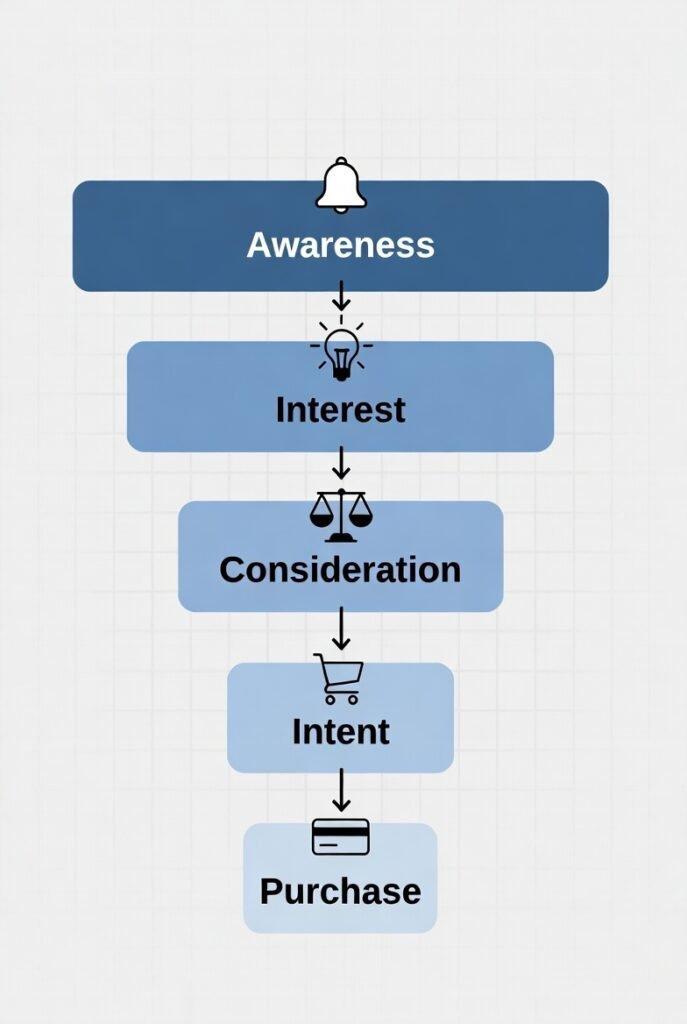
To position your business to grow, you need more than ads, social media, or email campaigns. You need a clear website that supports every marketing effort.
Your website is the central hub of your digital growth strategy. When it is structured properly, optimized for search, and designed for conversion, it turns traffic into measurable results.
A clear website answers three questions instantly:
- What do you offer?
- Who is it for?
- What should visitors do next?
If those answers are not obvious within five seconds, your marketing performance will suffer.
Why a Clear Website Is Essential for Business Growth
A website for business growth acts as your 24/7 sales engine. Every campaign—SEO, paid ads, content marketing, social media—ultimately leads back to your website. If that destination is confusing, slow, or poorly structured, you lose credibility and revenue.
According to NNGroup’s usability research, users form opinions about websites in milliseconds. Clear messaging, intuitive navigation, and fast loading speed directly influence trust and conversions.
To position your business to grow globally, your website must:
Communicate value clearly
Load in under three seconds
Be mobile responsive
Guide users toward one primary action per page
Align with your broader marketing goals
Without this alignment, marketing efforts operate in silos instead of driving scalable growth.
What Does It Mean to Position Your Business to Grow?
Positioning is not just branding. It is strategic clarity.
To position your business to grow online means:
Defining your target audience
Clarifying your unique value proposition
Structuring your website around customer intent
Aligning content with search demand
Optimizing for conversions
A marketing-driven website ensures that every page serves a purpose. Homepages build authority. Service pages target high-intent keywords. Blog posts attract informational traffic. Landing pages convert campaigns.
This structure strengthens SEO and improves performance across all channels.
Website Structure That Supports Marketing Efforts
A website structure that supports marketing efforts is built around clarity and hierarchy.
1. Clear Homepage Messaging
Your homepage should immediately state:
Who you help
What problem you solve
What outcome clients can expect
Avoid vague slogans. Use benefit-driven headlines. For example:
“Helping service-based businesses scale with conversion-focused website strategy.”
2. Strategic Navigation
Limit main navigation to 5–7 core items. Overloaded menus create friction. A clear website strategy prioritizes simplicity.
Suggested structure:
Home
About
Services
Case Studies
Blog
Contact
3. Conversion-Focused Service Pages
Each service page should:
Target one primary keyword
Explain benefits, not just features
Include testimonials
Provide a strong call-to-action
A conversion-focused website guides visitors step by step toward inquiry or purchase.
How a Clear Website Improves Conversions
How a clear website improves conversions is simple: clarity reduces friction.
When visitors understand your offer and trust your expertise, they act. Key elements that improve conversion rates include:
Clear headlines
Short paragraphs
Bullet points for readability
Social proof
Strong CTAs
Fast load speed
Mobile-first design
Google’s SEO Starter Guide emphasizes structure, crawlability, and helpful content. When your website follows these standards, you improve visibility and trust simultaneously.
To position your business to grow sustainably, focus on both traffic and conversion optimization.
SEO Foundations for Long-Term Growth
A digital growth strategy begins with SEO fundamentals:
Keyword Alignment
Map keywords to pages:
Informational keywords → blog posts
Transactional keywords → service pages
Branded keywords → homepage
Use primary and secondary keywords naturally. Avoid stuffing. Instead, strengthen semantic relevance with related phrases.
On-Page Optimization
Ensure:
One H1 per page
Keyword in first 100 words
Descriptive meta titles
Internal linking between related pages
Optimized images with alt text
External Authority Links
Reference credible resources to strengthen trust, authority, and SEO signals:
Google Search Central (SEO Fundamentals Guide)
https://developers.google.com/search/docs/fundamentals/seo-starter-guideNielsen Norman Group – Website Usability Research
https://www.nngroup.com/articles/HubSpot Marketing Blog – Website Strategy & Growth
https://blog.hubspot.com/marketingSearch Engine Journal – SEO & Digital Marketing Insights
https://www.searchenginejournal.com/Moz Beginner’s Guide to SEO
https://moz.com/beginners-guide-to-seo
These authoritative sources support E-E-A-T principles and reinforce credibility for Google Discover and organic search performance.
Global Growth and Geographic Optimization
If you serve multiple regions, incorporate GEO elements strategically.
Examples:
Create location-based landing pages (e.g., services in New York, London, Sydney)
Include region-specific testimonials
Optimize Google Business profiles for physical locations
Add structured data markup
Even global brands benefit from localized content. Building a marketing-driven website for global reach requires clarity in messaging and regional relevance.
Step-by-Step: How to Build a Marketing-Driven Website
Define your target audience and core offer
Clarify your positioning statement
Structure navigation around services
Create optimized service pages
Add case studies for authority
Implement SEO best practices
Test user journeys and improve conversions
This process helps position your business to grow with measurable outcomes.
Frequently Asked Questions
What is the best website strategy for small business growth?
The best website strategy for small business growth focuses on clear messaging, targeted service pages, SEO optimization, and strong calls to action that drive inquiries or sales.
How do I position my business to grow online?
To position your business to grow online, clarify your value proposition, optimize your website for search intent, and align all marketing channels with one central conversion-focused website.
How does a website structure support marketing efforts?
A website structure supports marketing efforts by guiding visitors logically, improving SEO crawlability, and directing traffic from campaigns to high-converting pages.
How does a clear website improve conversions?
A clear website improves conversions by reducing confusion, increasing trust, and guiding users toward a single desired action.
Why is a marketing-driven website important?
A marketing-driven website ensures that every page contributes to lead generation, brand authority, and measurable growth.
What role does SEO play in business growth?
SEO increases visibility, drives qualified traffic, and supports long-term digital growth strategy without relying solely on paid ads.
Should global businesses use location-based pages?
Yes. Location-based pages improve regional visibility and help attract local search traffic in competitive markets.
How often should I update my website for growth?
Review performance quarterly. Update content, refine messaging, and improve technical SEO regularly.
What makes a conversion-focused website effective?
Clear headlines, strong social proof, fast load speed, mobile optimization, and compelling calls to action.
Can a clear website replace paid advertising?
No. However, a clear website amplifies paid advertising performance by improving conversion rates and lowering acquisition costs.
Make Your Website Your Growth Engine
To truly position your business to grow, your website must become the foundation of your digital strategy. When messaging is clear, structure is intentional, and SEO is integrated, every marketing effort becomes stronger.
Audit your website today. Simplify your message. Align your pages with user intent. Optimize for conversions. Growth follows clarity.
Table of Contents