 Skip to content
Digital Marketing Strategies for Startup Websites in 2026
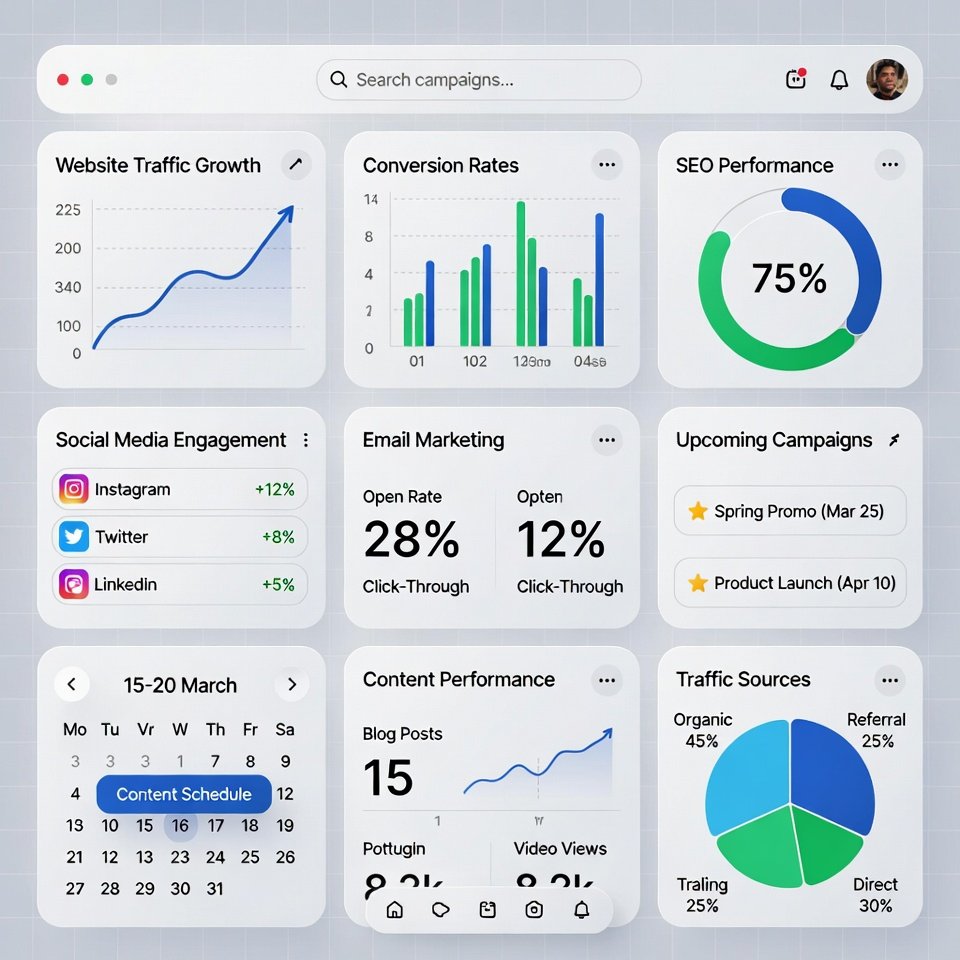
Starting a new business is exhilarating—but without effective digital marketing strategies, even the best ideas can go unnoticed.
For startup websites, mastering online visibility is essential to attract customers, drive conversions, and scale rapidly.
In this guide, we’ll cover actionable marketing tactics, practical examples, and the latest trends to ensure your startup thrives in 2026.
Why Digital Marketing Strategies Are Critical for Startups
Digital marketing strategies give startups a level playing field against established competitors.
By leveraging SEO, social media, content marketing, and paid advertising, small businesses can generate measurable results quickly.
Research shows that startups using structured online campaigns can increase web traffic by up to 300% in the first year .
Top Digital Marketing Strategies Every Startup Website Should Implement
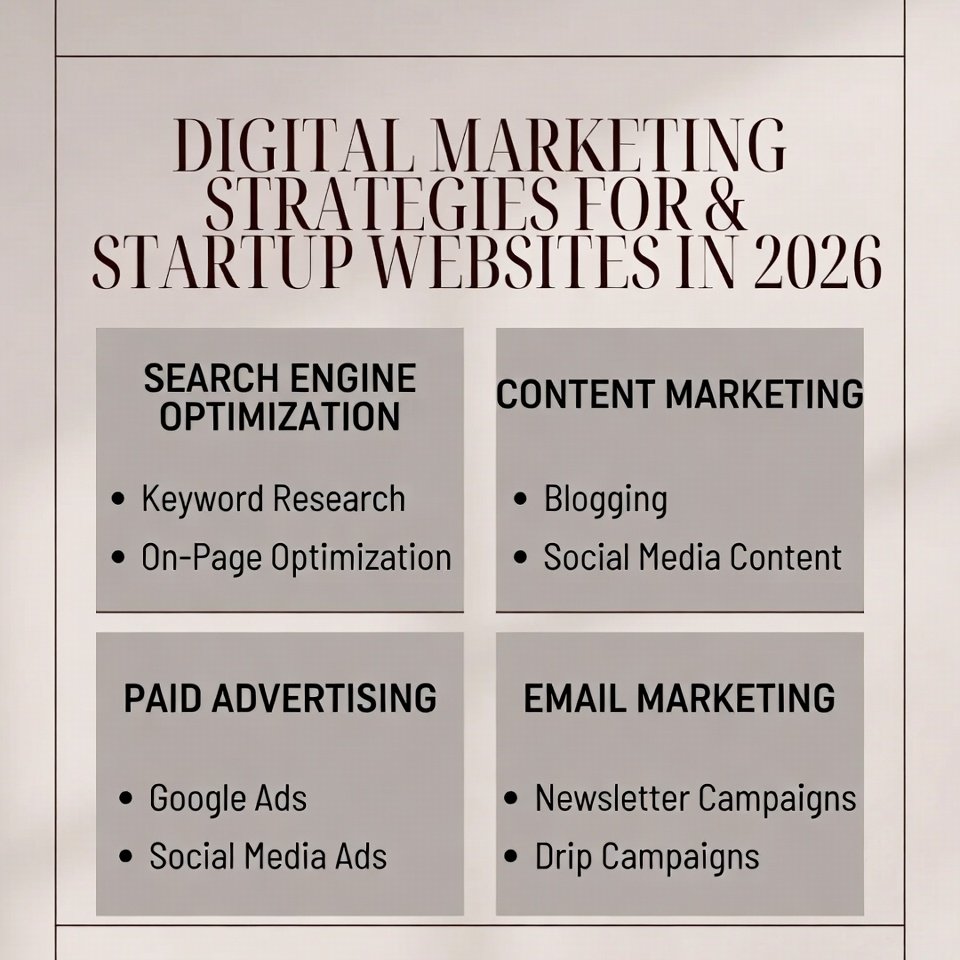
1. Search Engine Optimization (SEO)
SEO is the backbone of long-term online success. Startups should focus on:
Keyword Research: Identify relevant keywords using tools like Google Keyword Planner or Ahrefs. Include primary, secondary, and long-tail variations.
On-Page SEO: Optimize titles, meta descriptions, headings, and alt text for images. Ensure fast page loading and mobile responsiveness.
Local SEO: Include geographic keywords if targeting a specific area, and set up a Google Business Profile.
Pro Tip: Use schema markup to help Google feature your startup in rich snippets.
2. Content Marketing
Content builds trust and authority. Effective tactics include:
Blogging: Publish guides, how-to articles, and case studies to answer common customer questions.
Video Content: Short tutorials, behind-the-scenes clips, and product demos increase engagement.
Guest Posting: Collaborate with authoritative sites to expand reach and build backlinks.
Example: A startup software company can create a blog on “Top 10 Productivity Tools for Small Teams” to attract targeted traffic.
3. Social Media Marketing
Social media platforms amplify brand awareness. Key strategies include:
Platform Selection: Focus on channels where your audience is active (LinkedIn for B2B, Instagram for B2C).
Engaging Content: Polls, reels, stories, and user-generated content boost interaction.
Paid Social Ads: Utilize precise targeting to drive leads efficiently.
Pro Tip: Track engagement metrics to refine campaigns and improve ROI.
4. Email Marketing
Email remains one of the most cost-effective strategies for startups. Steps include:
Build a Quality List: Collect leads via newsletters, eBooks, and website sign-ups.
Segment Audiences: Tailor messages to user behavior or demographics.
Automate Campaigns: Welcome sequences, abandoned cart reminders, and product updates.
Example: A startup can send a monthly “Product Tips & Updates” email to engage existing users and encourage referrals.
5. Pay-Per-Click Advertising (PPC)
PPC campaigns provide instant traffic and measurable ROI:
Google Ads: Target specific keywords to appear in search results instantly.
Social Media Ads: Facebook, Instagram, and LinkedIn ads help reach a precise audience.
Budget Optimization: Start with a small budget, monitor performance, and scale effective campaigns.
Pro Tip: Combine PPC with SEO for a balanced short- and long-term growth strategy.
6. Influencer and Affiliate Marketing
Partnering with micro-influencers or affiliates can amplify reach cost-effectively. Strategies include:
Identify influencers relevant to your niche.
Provide unique discount codes or affiliate links.
Track performance using UTM parameters.
Example: A fitness startup can collaborate with health bloggers to promote a new app.
7. Analytics and Conversion Rate Optimization (CRO)
Digital marketing is measurable. Startups should:
Set KPIs: Track website traffic, bounce rates, leads, and conversions.
A/B Testing: Test landing pages, call-to-action buttons, and ad creatives.
Use Tools: Google Analytics, Hotjar, or Mixpanel help refine strategies.
8. Emerging Trends to Watch in 2026
AI-Powered Marketing: Personalized recommendations, chatbots, and content creation.
Voice Search Optimization: Structure content to answer questions naturally for Alexa, Siri, and Google Assistant.
Video-First SEO: Short-form videos rank highly on Google Discover and YouTube search.
More Articles
Frequently Asked Questions
What are the best digital marketing strategies for startups?
Focus on SEO, content marketing, social media, email campaigns, and paid ads to build visibility and attract leads.
How can a startup improve website traffic quickly?
Combine PPC advertising, guest blogging, and social media promotion while optimizing SEO for long-term growth.
Which social media platforms work best for startup marketing?
Select platforms where your target audience is active, like LinkedIn for B2B or Instagram for B2C startups.
How do startups track digital marketing success?
Use analytics tools like Google Analytics, Hotjar, or Mixpanel to monitor KPIs, user behavior, and conversions.
What is the most cost-effective strategy for small startups?
Email marketing and content marketing provide high ROI with minimal budget, especially when paired with SEO.
How can startups leverage local SEO effectively?
Include geographic keywords, register on Google Business Profile, and encourage reviews to improve local search visibility.
How do I optimize my startup website for voice search?
Use natural language in headings, answer common questions, and structure content with FAQs for digital assistants.
Should startups invest in influencer marketing?
Yes, collaborating with micro-influencers can boost credibility and reach niche audiences efficiently.
How often should a startup update its digital marketing strategy?
Review performance monthly and adjust campaigns based on metrics, trends, and audience behavior.
Can AI tools help startup marketing in 2026?
Absolutely. AI can automate content creation, email personalization, chatbots, and predictive analytics for smarter campaigns.
Ready to Supercharge Your Online Growth?
Want personalized guidance to implement these digital marketing strategies for your startup?
Book a free discovery call today and let’s create a custom plan to grow your website traffic, leads, and sales!
Table of Contents